Roshan Nathanial: Building International Boxing Connections and Developing the Next Generation of Athletes
 Roshan Nathanial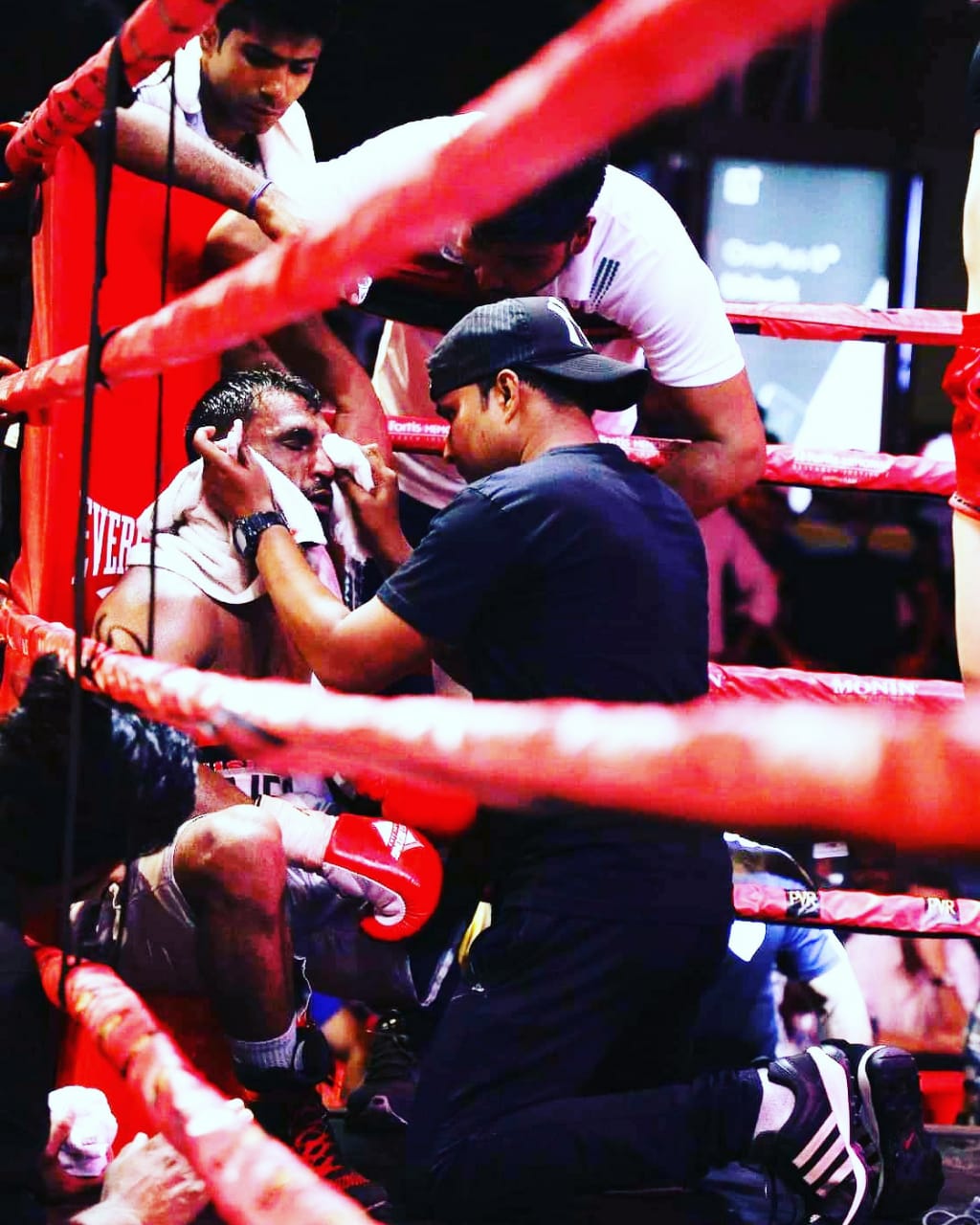
Roshan Nathanial during his international boxing activities connecting athletes and boxing professionals across countries.
Modern boxing is increasingly international. A fighter’s career can begin in one country, develop through competition in another and eventually lead to championship opportunities on a different continent.
For boxing coach, promoter and international matchmaker Roshan Nathanial, creating those connections has become an important part of his work.
From his early involvement in Indian boxing to professional events in Dubai and Sri Lanka and his continued work in Australia, Nathanial has built a career around connecting athletes, coaches, promoters and boxing organisations across borders. At the same time, his coaching work has remained focused on developing fighters and introducing younger participants to the sport.
The combination gives his career two interconnected dimensions: creating opportunities for today’s athletes while helping develop the participants who could become tomorrow’s boxers.
Building Connections Across Boxing Markets
Nathanial’s international work has developed through professional boxing events involving athletes from different countries.
The Indian Boxing Council says Team Roshan Sports Promotion has conducted boxing shows in Dubai, Sri Lanka, the Philippines, Thailand and India, bringing together professional boxers from different backgrounds and styles. It also identifies Nathanial as an International Matchmaker and Technical Director for DJMC Events/Boxing UAE.
Those roles place Nathanial in a position where relationships between different parts of the boxing industry become particularly important.
A professional boxing event depends on more than the two athletes entering the ring. Promoters, managers, coaches, matchmakers, officials and sanctioning organisations all contribute to putting a contest together.
International connections can therefore become an important part of an athlete’s development.
From Indian Boxing to an International Network
India has remained a central part of Nathanial’s boxing journey.
Team Roshan Sports Promotion was incorporated in India in 2019, with Nathanial listed as a director.
The organisation subsequently became involved in professional boxing events both in India and overseas.
Tapology records Team Roshan Sports Promotion events in India and lists Nathanial as matchmaker, including an eight-bout professional show in New Delhi in October 2020.
The international expansion of that work created a pathway through which Indian boxers could participate in contests outside their domestic environment.
Dubai as an International Boxing Hub
Dubai became an important part of that international development.
Nathanial’s work with DJMC Events involved matchmaking and technical direction for professional boxing events bringing together fighters from multiple countries.
Tapology records, for example, a June 2022 Dubai event promoted by Team Roshan Sports Promotion, with Nathanial listed as matchmaker. The card included a WBC Asian Light Flyweight title contest as well as fighters from several countries.
These events provided more than individual fight opportunities. They helped establish professional relationships between people working in different boxing markets.
For Indian athletes, that kind of network can provide access to opponents, promoters and competitions that may not otherwise be available domestically.
Developing Athletes Through Competition
International connections have value only when they translate into meaningful opportunities for athletes.
Nathanial’s work with fighters such as Urvashi Singh, Sachin Dekwal, Sarjubala Devi and Laldingliana demonstrates the connection between athlete development and professional competition.
The Indian Boxing Council identifies these four boxers among the professional athletes managed by Team Roshan.
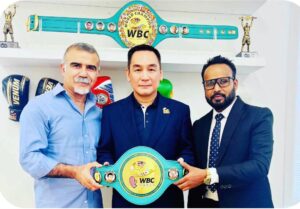
The World Boxing Council has also documented Nathanial’s involvement in Urvashi Singh’s development. According to the WBC, Singh trained at Roshan Boxing Academy and was encouraged and nurtured by Nathanial during her early development before becoming a WBC International champion.
Her progression illustrates the wider pathway: training can provide the foundation, while carefully developed professional opportunities can allow an athlete to test that preparation at increasingly significant levels.
Creating Opportunities Beyond Domestic Competition
International boxing experience can expose athletes to different styles, opponents and competitive environments.
Nathanial’s involvement in events in Dubai and Sri Lanka helped create such opportunities for Indian boxers.
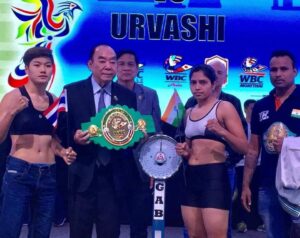
The Colombo professional event in November 2022, for example, brought Indian fighters including Urvashi Singh, Sarjubala Devi and Sachin Dekwal onto an international card. Nathanial was involved as promoter and technical director, while the event included a WBC Asia Continental title defence.
This type of cross-border competition can become an important step for fighters seeking to establish themselves professionally.
It also demonstrates how international boxing networks can connect athletes who might otherwise compete primarily within their own national systems.
The Importance of the Next Generation
While professional boxing has been a major part of Nathanial’s career, athlete development does not begin with a professional contract.
It begins much earlier, when young people first encounter the sport.
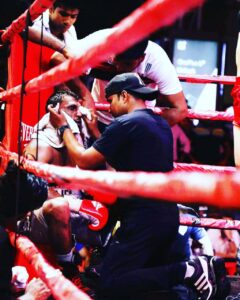
Nathanial’s current work in Melbourne includes coaching at Tarneit Boxing & Fitness Centre, where programmes are designed for different levels of participants, from beginners to athletes pursuing more serious boxing development.
The centre identifies Nathanial as its founder and head coach and describes his coaching approach as focused on fundamentals, discipline, mental resilience and long-term athlete development.
That creates a connection between grassroots participation and high-performance boxing.
A young participant does not need to arrive at a boxing gym with ambitions of becoming a professional fighter. The first objective can simply be learning the sport, becoming physically active and developing confidence.
For those who later demonstrate an interest and ability to compete, the same environment can provide a foundation for more advanced development.
Making Boxing Accessible to Young Participants
Youth development is not simply about identifying future champions.
Community boxing can provide children and teenagers with structured physical activity and an opportunity to develop discipline, coordination and confidence.
Nathanial’s Australian work therefore adds another layer to his international boxing career.
His professional experience gives him an understanding of the demands of high-level boxing, while his community coaching work allows those fundamentals to be introduced to participants much earlier in their sporting journey.
The result is a potential pathway that begins with participation and can, for some athletes, eventually lead toward competition.
Connecting Professional Boxing With Community Sport
Nathanial’s involvement with WBC Cares provides another example of the relationship between professional boxing and community-focused activity.
In July 2023, the World Boxing Council and WBC Cares announced Nathanial as a Cares Ambassador for India, recognising his involvement with boxing and his participation in the organisation’s social-responsibility mission.
The appointment was connected to a planned charity boxing event in Melbourne.
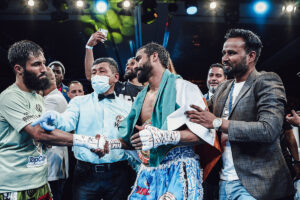
The resulting Charity Showdown took place on December 15, 2023. The WBC reported that the event was promoted by DJMC, Peter Maniatis, Dunstan Rozairo and Nathanial, with Indian boxer Urvashi Singh retaining her WBC International title and winning an Asian Pacific belt.
The event showed how the professional boxing network could also be used in support of a broader community and charitable purpose.
Australia Adds a New Dimension
Australia represents another stage in Nathanial’s international development.
His earlier career established connections across India, the Middle East and South Asia. His work in Melbourne now places those experiences within an Australian sporting environment.
That creates an opportunity to connect established professional boxing networks with grassroots participation.
For experienced boxing professionals, this type of transition can be significant. International knowledge can be shared locally, while Australian athletes and boxing communities can become part of a wider network.
Nathanial’s current role in Tarneit reflects that two-way connection between international experience and local sporting development.
Developing More Than Boxers
Long-term athlete development is not limited to technical boxing ability.
Nathanial’s coaching philosophy places emphasis on fundamentals, discipline and mental resilience, according to his Australian coaching profile.
Those qualities can be valuable regardless of whether a young participant eventually competes professionally.
For some, boxing may become a competitive career. For others, it may remain a recreational sport or a way to improve fitness and confidence.
A development-focused approach allows those different outcomes to coexist.
The Role of International Relationships
Boxing remains a sport where relationships matter.
A fighter may need a coach to prepare for a contest, a manager to guide the career, a matchmaker to identify an opponent and a promoter to create the event.
When those relationships cross national borders, they can open additional possibilities.
Nathanial’s career has increasingly operated across those different parts of the sport. His work as a coach connects him to athletes; matchmaking connects him to opponents and promoters; technical direction connects him to event organisation; and sports promotion provides a platform for professional competition.
That combination has helped form an international network around his boxing activities.
A Pathway From Participation to Opportunity
The long-term objective of athlete development is not necessarily to move every participant toward professional boxing.
Instead, it can be about creating a pathway where each athlete can progress according to their ability and ambitions.
For a beginner, that may mean learning basic boxing techniques.
For a developing amateur, it may mean gaining competition experience.
For a professional boxer, it may mean securing appropriate international contests.
And for an established fighter, it may mean receiving an opportunity to compete for a recognised championship.
The important element is that the pathway exists.
Looking Toward the Next Generation
Nathanial’s career now brings together several stages of boxing development.
His international matchmaking and promotional work connects fighters with professional opportunities. His coaching work develops athletes technically and mentally. His community involvement introduces younger participants to the sport. And his international relationships create connections between boxing communities in different countries.
That combination provides a broader perspective on what an experienced boxing professional can contribute.
The next generation of athletes will not all follow the same route. Some may compete locally, some may progress through amateur boxing and others may eventually enter the professional ranks.
What matters is having the coaching, competition, relationships and opportunities available when they are ready to take the next step.
Building Connections for the Future
Roshan Nathanial’s boxing journey has increasingly become about connecting different parts of the sport.
From India to Dubai, Sri Lanka and Australia, his work has involved athletes and boxing professionals operating across national boundaries. At the same time, his coaching work continues at grassroots level, where young participants are taking their first steps into the sport.
The two sides of the work are closely connected.
International boxing needs new athletes. Developing athletes need opportunities. Opportunities require networks. And networks are strengthened when coaches, promoters, matchmakers and sporting communities work across borders.
For Nathanial, building those connections is therefore not simply about today’s fight card.
It is about creating an environment in which the next generation has a chance to develop, compete and discover how far boxing can take them.